
On our own SKU list, magnetic and marble-run building sets carry MOQs from 1 piece to 240 pieces. That spread is not a pricing trick — it tells you the supplier is quoting two different business models, and your first job is working out which one you are actually buying from. This page gives you a repeatable supplier-review method for magnetic building toys wholesale: how to separate observed evidence from supplier statements from open questions, and exactly which questions to put in writing before you pay a tooling fee or approve a second lot.
Key Takeaways
- Ask for the physical golden sample, not a photo. A sealed reference piece on the QC shelf settles colour, fit, flash and function disputes; photo-only approval is the failure mode that shows up on lot two.
- A Children's Product Certificate is product-specific, not a factory-wide document. For US-bound toys it should cite each applicable US consumer product safety authority children's product safety rule and identify the third-party, US consumer product safety authority-accepted laboratory — a generic 'we are certified' email is a supplier statement, not evidence.
- MOQ in this category is a proxy for production model. On our records, magnetic and marble-run sets range from MOQ 1 to MOQ 240; low-MOQ lines are usually ready-to-ship stock, higher-MOQ lines are made to order. Confirm which before you negotiate price.
- Write Incoterms with the version and a named place. 'FOB' alone has started freight arguments longer than the production run; the named place should be the port actually booked, such as Shantou or Shenzhen.
- If the SKU uses button cells, the battery compartment is a design question, not an afterthought. Screw closure, tool access and the warning are reviewed before the toy function is discussed.
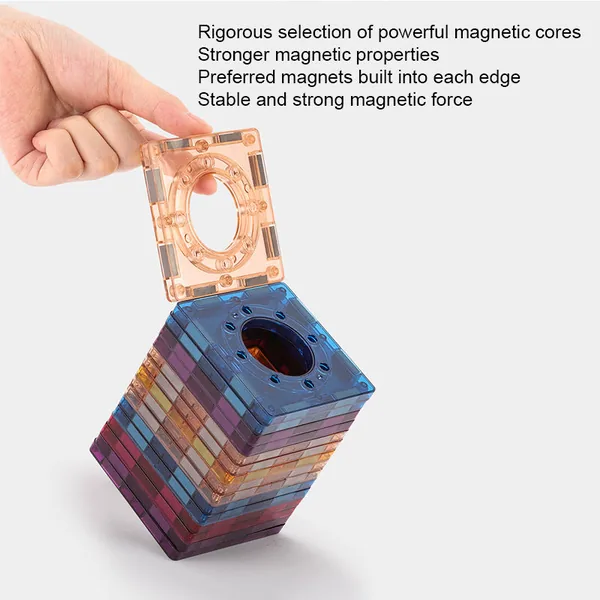
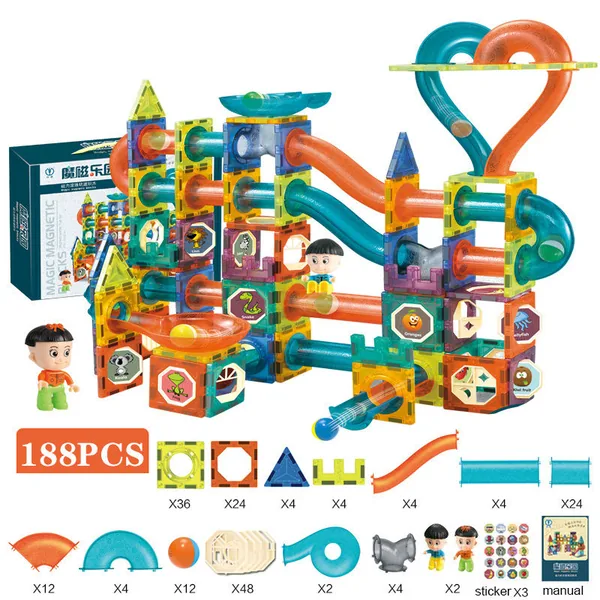

Why Chenghai and Shantou Anchor Magnetic Building Toy Sourcing
Chenghai, a district of Shantou in Guangdong, is a dense plastics-toy manufacturing cluster. Moulders, magnet suppliers, printing, colour matching and carton plants sit within a short drive of each other, which compresses development time: a tool correction, a new decal sheet or a packaging revision can be handled in days rather than a shipping cycle.
Shantou is also a working port for the region, so the port named in your Incoterms conversation is usually Shantou or Shenzhen depending on the booked sailing. Confirm it per shipment.
Compare that with the other clusters buyers meet. Zhejiang suppliers — Yongkang and Zhuji, for example — appear frequently in magnetic-toy search results and often quote strong tooling and assembly capability with Ningbo or Shanghai as the nearest port. Yiwu is a trading and small-order market: excellent for mixed containers and fast-moving filler lines, weaker when you need one factory to own a mould and a colour standard across years.
Which Origin Fits Your Program: Chenghai/Shantou vs Zhejiang vs Yiwu
Choose Chenghai or Shantou when you are developing a mould, holding a colour standard, and reordering the same SKU across seasons. Plastic and ABS construction sets, marble-run tracks and magnetic pipe bricks are the local strength, and the ecosystem supports tooling changes without changing supplier.
Choose Zhejiang when your priority is an integrated factory with documented management-system certifications and an established export desk. In supplier listings, Zhejiang magnetic-toy factories commonly publish ISO 9001 and BSCI-style management credentials and name Ningbo or Shanghai as the nearest port — verify each of those claims against a current certificate before you rely on it.
Choose Yiwu when you are assembling a mixed container of low-value impulse lines and want small quantities off the shelf. The trade-off is control: fewer of those sellers own the tool, so colour and fit consistency across repeat orders is the thing you must test hardest.
A compact, cheap line can outperform a premium line commercially. One buyer treated a low-ticket 'filler' as an afterthought; it sold out faster than the pricier categories and became the reorder he placed in advance. Range fit is a real criterion — just do not read one anecdote as a demand forecast.
Magnetic Building Toy Supplier Types at a Glance
| Chenghai / Shantou plastic & magnetic toy factory | Specialty | Plastic and ABS construction sets, marble-run tracks, magnetic bricks |
|---|---|
| Chenghai / Shantou plastic & magnetic toy factory | MOQ | varies by spec; on our records 1–240 pcs depending on line |
| Chenghai / Shantou plastic & magnetic toy factory | Origin | Chenghai, Shantou, Guangdong |
| Chenghai / Shantou plastic & magnetic toy factory | OEM/ODM | varies by factory; confirm tooling ownership and revision control |
| Chenghai / Shantou plastic & magnetic toy factory | Certifications | varies by SKU; ask for the report matching the product and market |
| Zhejiang magnetic toy factory (e.g. Yongkang, Zhuji) | Specialty | Magnetic tiles, cubes, 3D magnetic building blocks |
| Zhejiang magnetic toy factory (e.g. Yongkang, Zhuji) | MOQ | varies by spec |
| Zhejiang magnetic toy factory (e.g. Yongkang, Zhuji) | Origin | Zhejiang; nearest ports Ningbo / Shanghai |
| Zhejiang magnetic toy factory (e.g. Yongkang, Zhuji) | OEM/ODM | varies by factory |
| Zhejiang magnetic toy factory (e.g. Yongkang, Zhuji) | Certifications | management systems such as ISO 9001 or BSCI appear in listings; verify certificate scope and validity |
| Yiwu trading / small-order market | Specialty | Mixed-container assortment, impulse and filler lines |
| Yiwu trading / small-order market | MOQ | varies by spec; often small off-the-shelf quantities |
| Yiwu trading / small-order market | Origin | Yiwu, Zhejiang |
| Yiwu trading / small-order market | OEM/ODM | varies by spec; tool ownership often sits with a third party |
| Yiwu trading / small-order market | Certifications | varies by spec; ask which entity holds the test report |
How Do You Tell Observed Evidence From a Supplier Statement?
Split everything a supplier sends you into three buckets. Observed evidence is a document or object you can inspect: a test report with a report number, the product configuration and standard edition printed on it; a sealed golden sample; a tool number and revision card; a certificate whose scope names the product. A supplier statement is anything asserted in an email or on a landing page — 'no MOQ', 'food contact grade ABS', 'tested to EN71, ASTM and CE', 'partners in 20+ countries'. Open questions are the gaps: which SKU the report covers, who holds the tool, what happens to the tool if it sits idle.
Promotional pages are written to be persuasive, not auditable. A page can advertise zero minimum order and full OEM/ODM support in the same paragraph, and both can be true for stock lines while being false for a custom mould. Your job is not to distrust the supplier — it is to know which claims you have converted into evidence.
Two traps to avoid on the toy side specifically. Piece count is not MOQ: a '1922+ pcs' model kit and a 240-piece MOQ are unrelated numbers. And a standard, guidance page or audit framework is never proof that a specific factory or SKU is certified — only the report for that product is.
What Should You Ask Before Approving a Sample?
Ask for the tool number and revision on the sample you are approving, and refuse to treat a trade-show photo as the production standard. Booth samples are often hero units under flattering light; the revision card is what the line actually runs. If the supplier cannot tell you which revision your sample represents, you have not approved a standard — you have approved a photograph.
Then ask the sample-versus-production question in plain words: what will you compare bulk against, and where is that reference kept? The answer you want is a sealed golden sample held on the QC shelf, compared on colour, fit, flash and function. That physical piece is the argument-ender when a second lot arrives slightly off; emails are not.
For EU-bound magnetic sets, the file conversation should name the market, the lot and which document covers which test. CE marking and the EU Declaration of Conformity belong to the conformity process and must match the product scope — read the current consolidated text of Toy Safety Directive 2009/48/EC before you accept a document as covering your SKU.
For US-bound sets, the question is the Children's Product Certificate. A CPC is based on test results from a third-party, US consumer product safety authority-accepted laboratory, must be in English, and should identify the product, cite each applicable US consumer product safety authority children's product safety rule, name the certifying firm, give the date and place of manufacture, the testing dates and locations, and the laboratory. Ask for all of it; a certificate missing elements is not a certificate.
Which Documents Should You Request Per Destination Market?
Build one document matrix per SKU and per market, and make the supplier fill it in rather than sending a folder. For the US: the CPC plus the underlying test reports, with the applicable edition read from the current regulation — 16 CFR Part 1250 incorporates ASTM F963, and the edition and its regulatory status must be checked before you quote them. For the EU: the technical file supporting the Declaration of Conformity and the CE marking, referenced to the Toy Safety Directive. For the UK: UKCA is a different paper from an EU file, and a VOC file on an electric toy is different again — a buyer once tried to use one certificate for both, which is not how paperwork works.
GPSR adds a separate obligation layer for the EU market: importer, manufacturer and product-identification information should be mapped to the relevant market role before anything is published or shipped. That is a labelling and responsibility question, not a toy-safety test result.
Chemical testing deserves its own line. EN 71-9, EN 71-10 and EN 71-11 address organic chemical compounds in toys — requirements, sample preparation and methods. Ask which of those your report covers rather than accepting 'EN71' as a single word.
Tracking labels and small parts round out the list. Tracking information should be permanent and support product identification where applicable, and small-part risk is assessed against the actual product configuration — including detachable accessories and packaging components, not just the assembled toy.
What Belongs in the Purchase Order Beyond Price?
Incoterms first. Write the version and a named place: Shantou or Shenzhen as actually booked. The named place is not pedantry — an unnamed FOB term once produced a freight dispute that outlasted the production run.
Then the inspection plan. We will not invent an AQL number in a blog post, and you should not accept one from a catalogue sentence either. The number belongs on the PO, agreed between you and the factory, with the defect classes defined. On the floor, the operating rule is simpler: isolate a failed lot, record the defect class, release only after rework. Ask your supplier to describe that flow in writing.
Tooling terms are the clause buyers forget. Freeze the fee, who owns the tool, the storage period, and what happens if the tool sits idle for a year. A buyer who pays a tooling fee without those four points settled owns a dispute, not a mould.
Battery-operated SKUs need a separate line item. Where a toy uses button cells, the compartment and warning are reviewed before anything else: screw closure, tool access, and the warning. A cute electronic that opens with fingernails does not ship — US button-cell requirements and the door design are the same conversation.
How Do You Verify a Chinese Supplier Without Flying There?
Start with document identity. Ask for the business licence and confirm whether the entity is a manufacturer or a trading company — several magnetic-toy sellers describe themselves as trading companies while presenting manufacturer-style pages. That single answer changes who owns your tool and who answers for a defect.
Then request a third-party inspection for the first production lot, and make the inspector's scope explicit: compare bulk to the sealed golden sample on colour, fit, flash and function, and record defect classes. Repeated measurements by different inspectors can also reveal gauge or method variation that would otherwise be mistaken for part variation — useful when a dispute is about whether the part changed or the measurement did.
Finally, test the revision system. Ask for the current tool number, the revision card, and the change log. A factory that can produce those three things on request is running controlled production; a factory that cannot is running on memory.
FAQ
What MOQ should I expect for magnetic building toys wholesale?
Expect two different answers depending on the line. On our own records, magnetic and marble-run building sets range from MOQ 1 piece for ready-to-ship stock to MOQ 240 pieces for made-to-order lines. Low MOQ usually means stock inventory, not a lower production threshold — confirm whether the quote is stock or made-to-order before you compare prices.
Does a Children's Product Certificate cover a whole factory?
No. A CPC is product-specific and based on test results from a third-party, US consumer product safety authority-accepted laboratory. Ask for the certificate that names your SKU, cites each applicable US consumer product safety authority children's product safety rule, identifies the certifying firm and the laboratory, and states the date and place of manufacture. A factory-wide 'we are certified' claim is a supplier statement, not evidence.
Which certification applies to magnetic building toys sold in the EU?
EU-bound toys must meet the applicable essential safety requirements of Toy Safety Directive 2009/48/EC, with CE marking and an EU Declaration of Conformity matched to the product scope. Ask which test file covers which part of your SKU, and check the current consolidated text before relying on any document. GPSR adds separate importer and product-identification obligations for the EU market.
Is a low MOQ always better for a first order?
No. A low MOQ usually means ready-to-ship stock, which limits your ability to change colour, packaging or mould. Choose low MOQ if you are testing demand; choose a higher MOQ with a custom tool if you need a colour standard you can reorder for several seasons. The trade-off is flexibility against control.
What should I write in the Incoterms field?
Write the Incoterms version and a named place — for example FOB Shantou or FOB Shenzhen, matching the port actually booked. Leaving the named place open has produced freight disputes that lasted longer than the production run. Incoterms are a contract term, not a general understanding.
How do I confirm a supplier actually owns the mould?
Ask four questions in writing: the tooling fee, who owns the tool, the storage period, and what happens if the tool sits idle. If the supplier cannot answer all four, the ownership question is still open. Tooling policy is a document, not a handshake.
Are button-cell magnetic toys a higher-risk SKU?
Only where the SKU uses button cells, and then the compartment design and warning are the first review items. Check screw closure, tool access and the warning before discussing the toy function. A compartment that opens with fingernails should not ship, regardless of how the toy performs.
Sources
- Anhui Allnatt Trade Co., Ltd.
- Children Toys Manufacturer, Educational Toys, Magnetic Toys Supplier - Zhejiang Zbond Toys Co., Ltd.
- China Wholesale 3d Magnetic Building Blocks - YuQi
- Custom Magnetic Building Toys Supplier: Wholesale and Manufacturer in China
Related Products & Categories
Request a Quote or Book a Factory Audit
Send us the SKU, the destination market and the quantities you are considering, and we will come back with the line, the MOQ posture for that line, and the documents that apply to your market. If you want to verify us the same way this article tells you to verify anyone, ask for a factory audit or a physical sample with the tool number and revision card attached — we would rather you approve a sealed reference piece than a photo.
For a starting point on range, look at the magnetic building toy collection and the vehicle building sets; both are plastic and ABS construction lines with MOQs published per SKU.