
For US, EU, and other destination-market importers buying directly from factories or through trading companies, shortlist bulk building-set suppliers whose records connect the construction mechanism, exact variant, parts inventory, sales unit, packaging, and approved specification revision. For truck building sets bought in bulk, a shared truck theme is not enough: the sample, instructions, quote, and shipment records must identify the same buildable product. Approve the defined supplier-and-variant combination, not the supplier’s entire catalog.
Use the same requests and acceptance criteria for every candidate. A factory relationship does not replace item-level checks, and a trading-company route does not inherently weaken quality control. Record who sells the goods, who makes them, and who owns corrections and change notifications.

What Must a Building-Set SKU Identify Before Suppliers Can Be Compared?
A comparable SKU must identify how the toy connects, which variant is supplied, and exactly what the buyer receives as one sales unit.
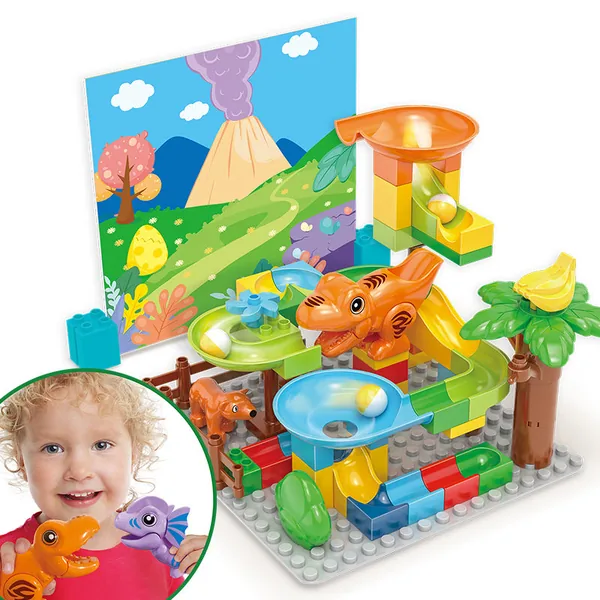
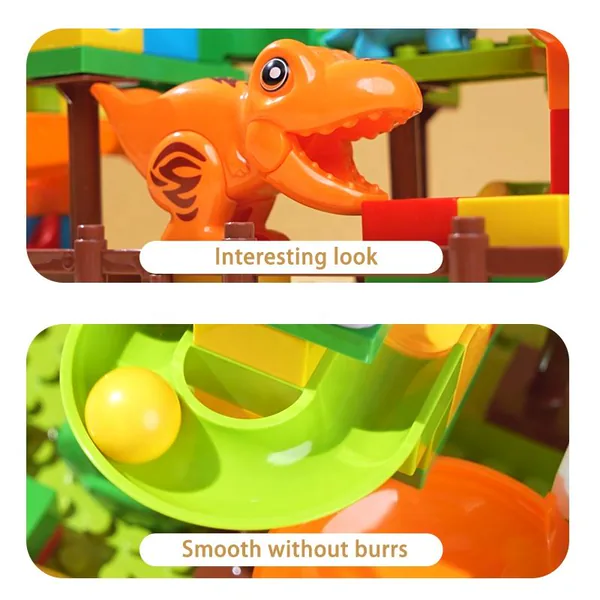
Start with construction mechanism and assortment use. A buildable truck using interlocking bricks belongs in a different comparison from a truck-themed buildable track. Under this assortment taxonomy, magnetic tracks belong in Magnetic Building Toys; non-magnetic buildable tracks belong in Marble Run Building Sets. Use Brick Building Sets, Large Building Blocks, or Creative Construction Toys where the demonstrated construction format fits. Keep truck theme, intended age, block size, and piece-system compatibility as separate attributes.
Request close-up connector photographs and a sample assembly rather than classifying from the product title alone. Then identify the exact vehicle or track layout, color combination, included accessories, and any alternative builds. For a multi-build truck set, establish whether the advertised models can be assembled simultaneously or require reuse of the same parts.
Link the supplier’s item reference to your internal SKU and specification revision. Keep the parts-list, instruction, and artwork revisions alongside that mapping. A stable SKU is useful, but it does not establish that its contents have remained unchanged.
What Can the Vehicle-Block and Space Marble-Run Catalog Records Establish?
| Vehicle building-block kit advertised as 140 pieces | Recorded identity: a large-building-block vehicle kit. Recorded packing: color box; package dimensions 50 × 10 × 37 cm; carton quantity 12; master-carton dimensions 62 × 52 × 77 cm. Buyer decision: advance to a sample request for a vehicle-building assortment. Request connector photographs, the exact vehicle variant, an itemized parts list, instructions, and a quote defining one sales unit. Do not assume the vehicle is a truck or that the advertised count has been physically verified. |
|---|---|
| Space marble-race construction set advertised as 80 pieces | Recorded identity: a space-themed marble-run construction set. Recorded material: plastic. Recorded packing description: single item. Buyer decision: evaluate for a buildable-track assortment rather than treat it as an equivalent truck-building kit. Request evidence of the connection mechanism, an itemized inventory, the retail-pack specification, carton packing, and instructions. The packing description does not establish what is included in one quoted sales unit. |
| Comparison outcome | Retain the vehicle kit for vehicle-assortment sample screening and the space set for track-assortment screening. Neither catalog-stage result constitutes production-order approval. Compare suppliers only after the offered mechanism, variant, and sales unit have been aligned. |
Which Requests and Acceptance Criteria Should Every Supplier Receive?
| Connection mechanism and assortment fit | Request: connector close-ups, an assembly demonstration, and the exact offered variant. Accept: the sample demonstrates the requested connection system and assortment use. If the response supplies only a truck-themed image, request mechanism evidence before treating the offer as equivalent. This check prevents comparisons between unlike construction products. |
|---|---|
| Variant identity and revision | Request: the supplier item reference, buyer SKU cross-reference, dated specification, variant photographs, and revision identifiers. Accept: the quote, sample label, parts list, and instructions identify the same variant. Resolve conflicting references before order approval. This establishes which product the price and approval cover. |
| Piece inventory | Request: a parts list showing part identifier or clear image, color, quantity, and the treatment of accessories and spares. Accept: the counted sample reconciles with the agreed inventory and counting convention. Record discrepancies individually rather than accepting the headline piece count as verification. This makes shortages and substitutions describable. |
| Sales unit and current commercial terms | Request: a current quote stating whether the price covers one complete set, an assortment, or a display, plus quantity by variant, MOQ, validity, delivery basis, and quoted timing. Accept: the quote and purchase order use the same unit definition. Do not infer MOQ from piece count. This makes prices comparable without confusing a component, retail set, and shipping carton. |
| Retail packaging and carton packing | Request: retail-pack contents, artwork revision, package measurements, sets per carton, master-carton measurements, and label examples. Accept: the sample pack and proposed packing list agree with the specification. Do not infer master-carton dimensions from parcel dimensions or treat carton quantity as an order multiple without an explicit restriction. This supports receiving, storage, and pack identification. |
| Instruction quality and build check | Request: the instruction file for the offered variant and required languages. Accept: a reviewer can assemble the agreed truck or track configuration using the supplied inventory without undocumented steps. Record unclear diagrams, part-callout errors, missing steps, and assembly interference against specific pages or parts. This is a commercial build check, not a substitute for safety testing. |
| Destination-market document review | Request: the proposed age marking, packaging labels, and applicable item-specific reports and declarations for the intended destination. Accept for purchasing review: identifiable documents whose product photographs, construction, materials, and model scope can be reconciled with the offered variant. Supplier-declared certifications are not verified compliance; route them for appropriate review rather than treating them as approval. |
| Lot and shipment linkage | Request: a traceability example connecting the supplier item, specification revision, production lot, inspection record, carton identification, and packing list. Accept: the references can be followed to the relevant order and receiving record. Redacted commercial details are acceptable if the identity links remain checkable. This distinguishes a product definition from the history of particular shipped units. |
| Replenishment and change control | Request: the procedure for notifying changes to molds, connectors, materials, colors, inventory, instructions, and packaging. Accept: the supplier identifies the affected revision and lots and seeks the agreed approval before substitution. A reorder should reference the approved specification, not merely repeat the catalog title. This helps preserve the assortment definition across purchases. |
| Communication and corrective-action ownership | Request: a named contact, agreed response dates, and a discrepancy log linking each answer to the relevant SKU and revision. Accept: corrections are identifiable and closure evidence addresses the original issue. Record late responses as communication observations, not proof of fraud or worse behavior after payment. This shows whether the working relationship meets the buyer’s operating needs. |
How Should SKU Records Connect to Quality Checks and Replenishment?
Connect each quality observation and reorder to the approved SKU revision and identifiable shipment lot, rather than relying on the product name.
During sample review, count the agreed inventory and assemble the intended truck or track layout. Check connector engagement, wheel-and-axle assembly where included, instruction accuracy, and whether the complete contents fit the approved retail pack. Define any dimensional tolerances or repeated-use screening before inspection; buyer-selected screening criteria are not safety standards or predictors of return rates.
For a traceability exercise, ask the supplier to select an identifiable carton or finished lot and show its relationship to the order, product revision, and inspection record. Carry that identifier into your receiving record and, where your system supports it, subsequent stock movements. A SKU describes the product; a lot distinguishes a production or receipt grouping.
Compare the next delivery with the retained sample and controlled documents. Records support traceability, but do not by themselves prevent or reveal an undisclosed change. Physical checks and document review remain complementary evidence.
What Should the Supplier Approval Note Contain?
| Identity and scope | Record the supplier’s legal identity, seller and manufacturer roles, buyer SKU, supplier item reference, exact variant, destination market, intended age marking, sales unit, and applicable purchase order. |
|---|---|
| Controlled approval baseline | Identify the specification revision, parts-list revision, instruction revision, packaging-artwork revision, retained sample identifier, and dated quote. State which documents govern if a conflict occurs. |
| Specified target versus observation | Record each consequential target beside the actual sample or document observation and its evidence reference. Preserve discrepancies rather than replacing the original target with what arrived. |
| Decision and conditions | State request samples, request corrections, or approve the defined scope. Identify which conditions block purchase-order release or shipment release and which actions are nonblocking follow-up. |
| Responsible approvers and decision date | Name the purchasing approver and the responsible quality or destination-document reviewer, with their decision dates. Allocate responsibility explicitly rather than treating a sales contact’s acknowledgment as buyer approval. |
| Follow-up closure and reorder release | Give each condition an owner and agreed due date. Close it with a corrected file, replacement sample, inspection result, or other relevant evidence, then record the reviewer and closure date. Reopen review when a proposed change affects the approved product definition. |