
For US, EU, and global importers sourcing bulk truck building sets through a manufacturer or trading company, shortlist suppliers by verified connection mechanism and material evidence before comparing price. Require the exact variant, piece inventory, sales unit, packaging, instructions, and approval records to match the intended assortment. Use mandatory gates for acceptance and weighted scores for trade-offs; a low quote cannot compensate for an unresolved critical requirement.
Separate permission to request a sample and quotation from permission to release production. A catalog can justify investigating a truck-building set. It cannot, by itself, establish the construction delivered, current commercial terms, or suitability for sale in the destination market.

Which Construction Mechanism Belongs in the Truck Assortment?
Classify the set by how its components connect, then record truck theme, age positioning, and piece system as separate attributes.
For a truck-building assortment, request close-up photographs of the joints, the component inventory, and an assembly demonstration. Use Brick Building Sets for confirmed brick connections, Large Building Blocks for a confirmed large-block system, and Creative Construction Toys for other construction mechanisms. Do not assign a mechanism solely from a vehicle pictured on the box.
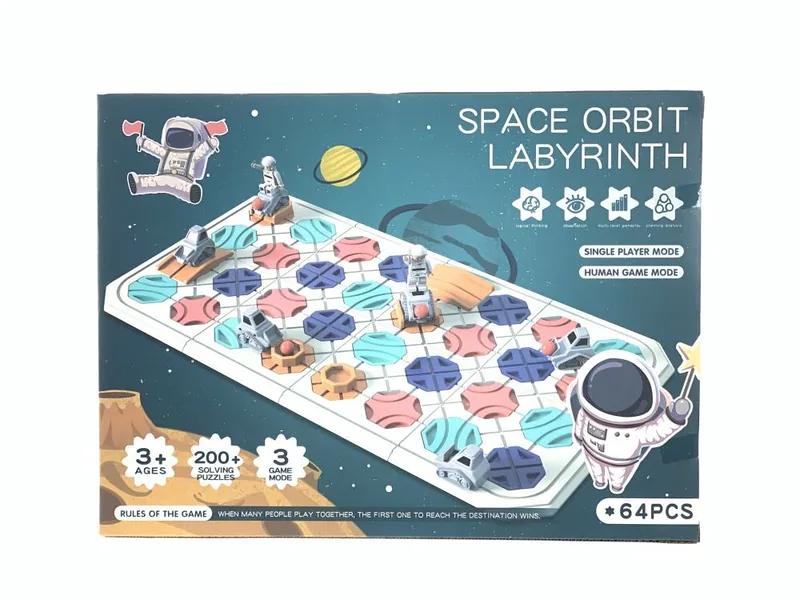
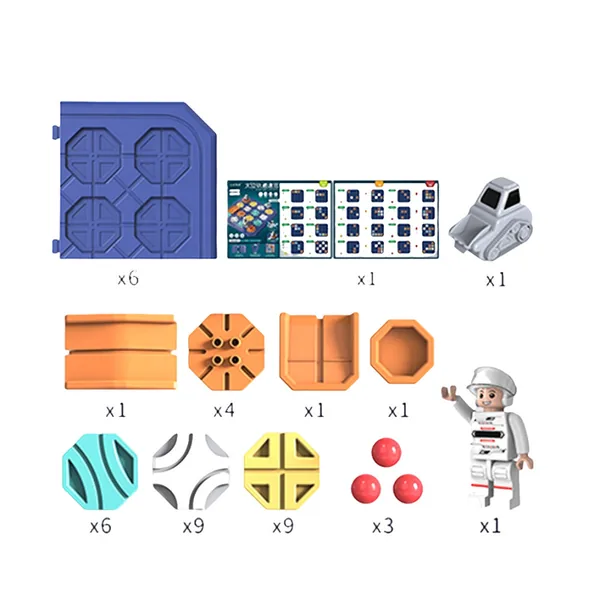
Magnetic tracks belong in Magnetic Building Toys; non-magnetic buildable tracks belong in Marble Run Building Sets. A magnetic marble-building kit is therefore a separate assortment candidate, not an interchangeable substitute for a truck-building set. Exclude ordinary puzzles, drawing boards without construction play, soft infant blocks, and standalone programmable or RC kits from this comparison.
What Evidence Must Each Truck Building-Set Supplier Provide?
| Connection mechanism and exact variant | Request: dated photographs, joint details, variant identifier, and an assembly demonstration for the quoted truck set. Acceptable response: the sample, specification, quotation, and packaging identify the same construction and variant. Decision: PASS when reconciled; HOLD for ambiguous variant identity; FAIL for a confirmed mechanism outside the truck assortment. This prevents comparing different products as equivalents. |
|---|---|
| Component materials | Request: a component-level material declaration covering blocks, wheels, axles, connectors, and any other included components, with references to supporting records. Acceptable response: materials are identified by component and tied to the exact variant and revision. Decision: HOLD if a generic plastic description is the only basis for approving material identity. A material declaration supports identification; it is not proof of toy safety. |
| Piece inventory and sales unit | Request: an illustrated parts list, count breakdown, and definition of one invoiced unit. For a 4-in-1 truck/car set, ask whether the models use shared pieces sequentially or can be built simultaneously. Acceptable response: the inventory, sample contents, instructions, box claim, and quoted unit agree. Decision: PASS after reconciliation; HOLD if the piece count could describe a display assortment rather than one retail set. |
| Packaging and instructions | Request: the retail-pack specification, display configuration, packing list, and complete instructions for each advertised build. Acceptable response: a reviewer can assemble the truck from the supplied inventory without undocumented substitutions, and the sales unit matches the packaging. Decision: HOLD until discrepancies affecting contents or assembly are resolved. Record retail-pack and master-carton measurements separately. |
| Destination-market evidence review | Request: the intended age positioning, destination-specific document package, and applicable product reports tied to the quoted construction. Acceptable response: the buyer's responsible reviewer checks issuer, scope, dates, standards, model identifiers, and product correspondence. Decision: HOLD production release until that review is accepted. Supplier-declared certifications are not verified compliance. |
| Sample, quotation, and QC approval | Request: an identified sample, a current quotation for the agreed sales unit and quantity, and a QC plan covering contents, joints, wheel/axle assembly, instructions, and packaging. Acceptable response: the approved sample and documents share a controlled specification revision, with change notification and corrective-action responsibilities agreed. Decision: PASS only for the approval stage actually completed. |
How Should Buyers Judge Material Records and Sample Quality?
Approve material identity through linked records and physical reconciliation, not through the word “plastic” or a certificate logo.
Ask the supplier to identify which components each material statement covers. A declaration for the main bricks does not automatically describe tires, axles, decorative parts, or packaging. Match supporting records to the sampled variant, and check issuer, scope, dates, referenced standards, and model identifiers as a purchasing review practice. Zignify recommends these document checks; they do not replace a destination-specific assessment.
For the commercial sample review, count the contents against the inventory, build the advertised truck, check that the instructions show the supplied connectors, and inspect wheel and axle assembly. Photograph the observations and retain the identified reference sample. These checks assess specification agreement and assembly usability; they are not a substitute for safety testing.
Apply the same controls whether the seller is a factory or a trading company. Record who manufactures, who conducts inspection, who authorizes changes, and who resolves a discrepancy. Business type alone does not establish stronger or weaker QC.
What Decisions Do the Catalog Examples Support?
| 4-in-1, 1,152-piece car-and-truck building set | Recorded response: plastic; display-box packing; reference MOQ 20; 128 units per carton; reference price US$1.90. Acceptance target: confirm the joint mechanism, the meaning of 1,152 pieces, the relationship between the four builds, and whether one quoted unit is a complete retail set. Decision: retain for a sample/quote request; HOLD material, inventory, sales-unit, and production approval until the linked evidence is accepted. |
|---|---|
| Magnetic marble-building kit | Recorded response: magnetic construction with marbles; plastic; kit packing; reference MOQ 2; reference price US$7.91. Acceptance target: evaluate as Magnetic Building Toys, with a confirmed component inventory and kit sales unit. Decision: exclude from a truck-only shortlist because of assortment mismatch, not because of a finding about supplier quality. Open a separate review if magnetic building toys are being sourced. |
How Should the Weighted Evidence Score Be Calculated?
| Material identity and traceability — proposed weight 30 | Compare component declarations, links to the quoted variant, and reconciliation with the sample. A generic catalog material description reaches only grade 1. |
|---|---|
| QC, inventory, and instruction evidence — proposed weight 25 | Assess the parts reconciliation, truck assembly review, inspection responsibilities, and corrective-action records against the agreed specification. |
| Replenishment and packing evidence — proposed weight 20 | Review the confirmed MOQ, retail unit, carton configuration, lead-time basis, repeat-order specification, and change-control response. Catalog MOQ and carton information remain grade-1 evidence until confirmed. |
| Comparable quotation evidence — proposed weight 15 | Check price at the planned order quantity, currency, inclusions, packaging, delivery terms, and quotation validity. A catalog reference price reaches only grade 1; it is not a current offer. |
| Communication and closure evidence — proposed weight 10 | Assess whether the supplier answers the truck-specific questions, identifies attachments and revisions, assigns an owner, and closes agreed actions. Record response timing separately from response completeness. |
What Score and Gate Outcome Does the Truck Example Receive?
Under this proposed rubric, the car-and-truck record receives 16.25 out of 100 evidence-readiness points and remains on HOLD for production approval.
The calculation is material evidence 1/4 × 30 = 7.5; QC and instruction evidence 0/4 × 25 = 0; replenishment evidence 1/4 × 20 = 5; quotation evidence 1/4 × 15 = 3.75; and communication closure 0/4 × 10 = 0. The catalog supports the three grade-1 entries. The total measures the current review stage, not the quality of the toy or the supplier.
Gate record: assortment fit is provisional pending joint-mechanism confirmation; material identity, piece inventory/sales unit, packaging/instructions, destination review, and sample/quote/QC approval remain on HOLD. No confirmed nonconformity is established by this desk screen. The permitted next action is a targeted sample-and-quote request, not a purchase release.
Do not assign the magnetic kit a competing truck-supplier score. It fails the truck-only assortment requirement and should be evaluated separately if that category is needed.
For subsequent quotations, score the price tier matching the planned order quantity, not a headline lowest tier, as recommended by BuyerPilot. Keep MOQ, carton quantity, and order multiple as distinct commercial terms. Neither a piece count nor a carton quantity establishes an order multiple.
A slow reply is a communication observation. It is not evidence of fraud or a prediction of worse behavior after payment.
What Must the Final Supplier Approval Record Contain?
| Identity and revision | Record the supplier's legal identity, manufacturing party where applicable, product/variant identifier, connection mechanism, destination, intended assortment, specification revision, sample identifier, and quotation revision. |
|---|---|
| Specified target versus observation | For every gate, place the required material, inventory, sales-unit, packaging, instruction, or document target beside the observed response. Reference the supporting attachment or sample observation and record PASS, HOLD, or FAIL. |
| Evidence log | Capture document title or sample reference, source, issue/revision date, receipt date, reviewer, review date, verification result, and the gate or score it supports. |
| Decision and conditions | State approved, held, or rejected, and specify the scope: evidence request, sample evaluation, commercial shortlist, or production release. Include the weighted score where applicable and identify every condition that must close before the next stage. |
| Responsible approval and date | Name the commercial decision-maker and the responsible quality or destination-document reviewer. Record approval dates and any limitations on their approvals. |
| Follow-up and closure | Assign each action an owner and due date. Record the replacement document or sample, the closure reviewer and date, the revised gate outcome, and whether the specification or score changed. |
When Should a Supplier Be Shortlisted, Held, or Rejected?
Shortlist for sample and quote when the product plausibly fits the truck assortment; hold purchase approval while critical evidence is unresolved; reject when a confirmed mismatch cannot meet the buyer's non-negotiable requirement.
For the catalog truck example, send one consolidated request covering joint photographs, the illustrated piece inventory, the four-build explanation, the component material declaration, packing definitions, instructions, and a quantity-specific quotation. Require the response to identify the same variant throughout.
After the gates pass, use weighted comparisons to choose between acceptable suppliers. Do not let a cheap price erase a material discrepancy, and do not let an unresolved document question become an accusation of dishonesty.
The approval record supports a bounded, reviewable decision. It does not itself prevent or expose an undisclosed material change; retain the approved reference, require change notification, and reconcile relevant production and inspection evidence with the agreed specification.